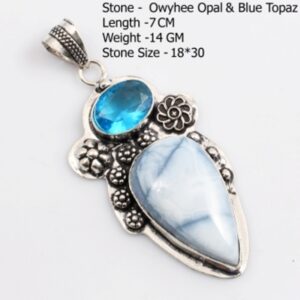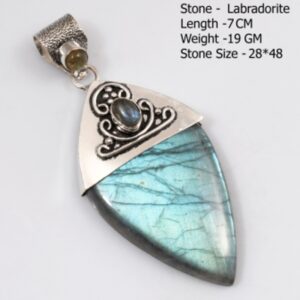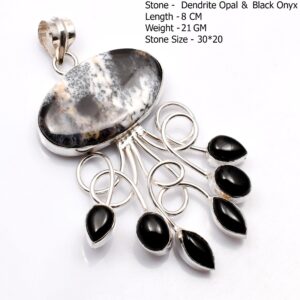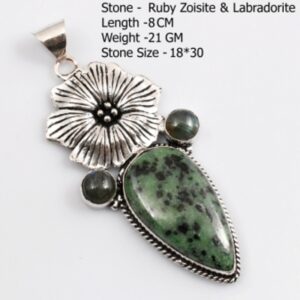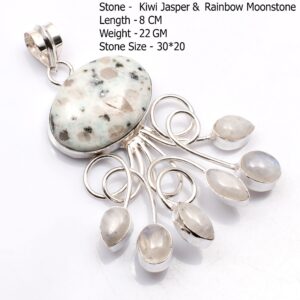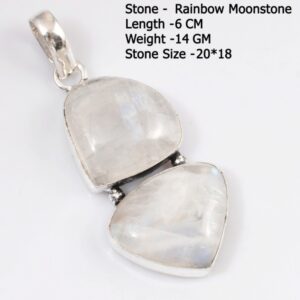
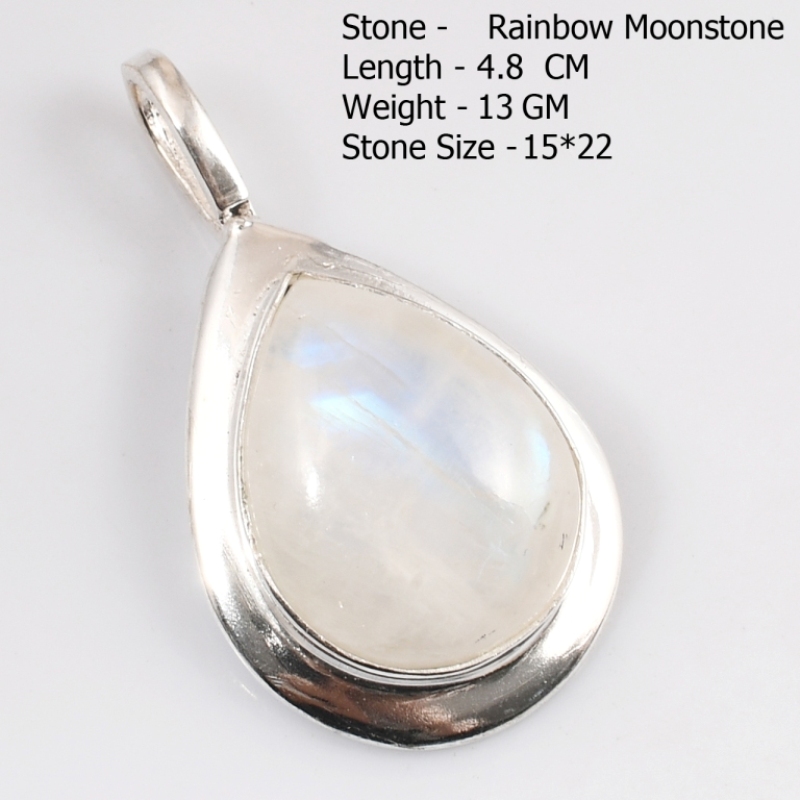
Please see the item info from the Photo

Moonstone is a mesmerizing gemstone belonging to the feldspar mineral group, celebrated for its unique, ethereal glow.
Core Characteristics
- Chemical Composition: A sodium potassium aluminum silicate, formula (Na,K)AlSi₃O₈.
- Crystal Structure: Formed by interlocking, alternating layers of orthoclase and albite feldspar.
- Hardness: 6 to 6.5 on the Mohs scale.
- Luster: Typically vitreous (glass-like) to sub-vitreous.
- Diaphaneity: Ranges from transparent to translucent.
- Color: Body colors include colorless, white, cream, peach, gray, pink, green, and brown.
Adularescence (The “Moon Effect”)
Its defining feature is a billowing, internal light known as adularescence.
- Origin: As light enters the stone, it scatters and diffracts between the microscopic layers of orthoclase and albite.
- Color: The sheen can be silvery-white, soft blue, or rainbow-like. The most prized is a vivid, glowing blue.
- Movement: The floating light appears to glide across the surface as the stone is moved, mimicking the shifting glow of moonlight on water.
Types & Quality
- Blue Sheen Moonstone: The most valuable, often from Sri Lanka, with a strong, vivid blue glow.
- White/ Silver Sheen: More common, with a milky white or silvery glow.
- Rainbow Moonstone: Exhibits a multi-colored, iridescent sheen.
- Cat’s Eye/ Star Moonstone: Rare varieties that display a sharp, moving line of light (cat’s eye) or a star-shaped pattern (asterism).
Sources
Major deposits are found in:
- Sri Lanka (finest quality)
- India (peach, green, and white varieties)
- Myanmar, Madagascar, Tanzania, and the USA
Meaning & Lore
- A June birthstone, symbolizing health, wealth, and longevity.
- Historically called the “Traveler’s Stone” and believed to protect against danger at sea.
- Associated with love, intuition, and new beginnings.
- In Hindu mythology, it’s considered solidified moonlight.